Published on: 2026-08-20  Number of views: 178
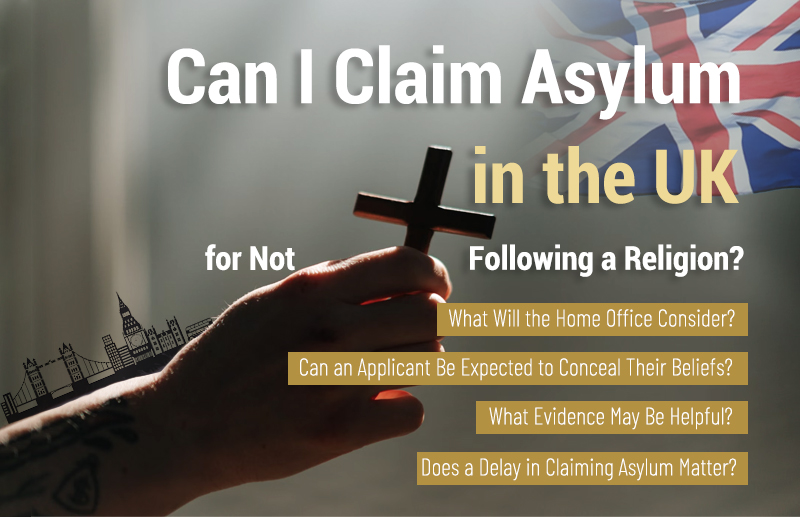
Can leaving a religion or becoming atheist support a UK asylum claim? Learn how the Home Office assesses apostasy, non-religious beliefs, evidence and risk on return.
A person may consider claiming asylum in the UK because they have left their former religion, changed their beliefs or become atheist or agnostic. In some countries, openly rejecting the dominant religion can lead to arrest, violence, serious discrimination or punishment.
However, identifying as non-religious does not automatically result in refugee status. The Home Office will examine the applicant’s individual circumstances, the genuineness of their beliefs and the particular risks they would face if returned.
Zahra, 25, who came to the UK lawfully for her study. She was raised as a Muslim but gradually stopped practising the religion and now considers herself non-religious.
While living in the UK, she became more open about her beliefs. Some relatives and members of her community became aware that she no longer followed Islam. She subsequently received hostile messages and became afraid that information about her beliefs could reach people in Iran.
She fears that, if returned, she may be pressured to participate in religious practices, forced to conceal her true beliefs or exposed to threats, punishment or adverse attention from the authorities and other religious actors.
Her nationality and non-religious identity would not automatically qualify her for asylum. The Home Office would consider matters including:
The Home Office would also examine her evidence and the current conditions in Iran. The outcome would depend on her individual circumstances rather than her nationality alone.

To qualify for refugee status, an applicant must normally establish a well-founded fear of persecution for at least one of the following Refugee Convention reasons:
The feared treatment must be sufficiently serious to amount to persecution. The applicant must also show that the authorities in their country cannot or will not provide effective protection and that safe and reasonable internal relocation is not available.
An applicant relying on apostasy or non-religious beliefs may be asked:
The Home Office will not normally expect every person to have detailed academic knowledge of religion. However, the applicant should be able to explain their personal journey honestly and consistently.
An applicant should not ordinarily be expected to hide a fundamental belief or pretend to follow a religion simply to avoid persecution.
UK case law recognises that freedom of thought and belief protects non-believers as well as religious believers. A person cannot necessarily be refused protection merely because they could remain silent or conceal their true position after returning.
The key question is how the person would genuinely live if returned. If they would conceal their beliefs only because they fear persecution, this may be relevant to the asylum assessment.
Depending on the circumstances, supporting evidence may include:
There is no single document that proves a person is genuinely non-religious. The Home Office will assess the evidence as a whole, including the applicant’s account and their answers during the asylum interview.
Applicants should never manufacture documents, exaggerate events or memorise an account prepared by somebody else. Inconsistencies or dishonest evidence can seriously damage the credibility of the claim.

A person should normally claim asylum as soon as they genuinely believe that returning to their country would expose them to persecution.
If the person waits until their existing visa is close to expiry, the Home Office may ask why the claim was not made earlier. There may be a reasonable explanation, for example:
Delay does not automatically result in refusal, but it may be considered when assessing credibility. A clear and truthful explanation is therefore important.
Apostasy and non-religion asylum claims require careful preparation. The applicant must present their personal development, genuine beliefs and risk on return in a clear and consistent way.
Star Jet Immigration Law Firm is authorised and regulated by the Immigration Advice Authority, registration number F202331612. We are authorised to provide Level 3 asylum, protection and complex immigration advice and services.
We can assist with:
If you fear returning to your country because you have left a religion, changed your beliefs or become non-religious, contact Star Jet Immigration Law Firm to arrange a confidential consultation.

* This article provides general information only and does not constitute legal advice. Every asylum claim is assessed according to its individual circumstances.*
❤️ Welcome to private message or call us for more detailed information~
☎️ 0121 517 1168; 0161 521 9800; 0795 668 8888
✉️ admin@starjetimmigration.com ✉️ weina@starjetimmigration.com
 4
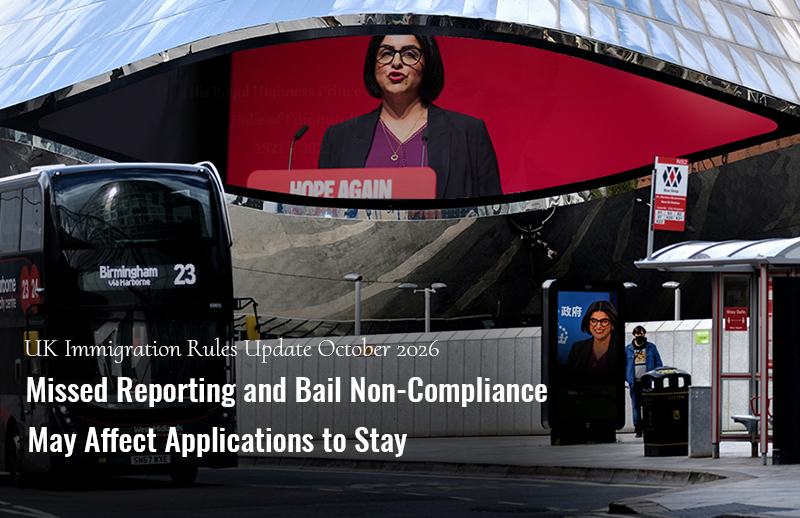
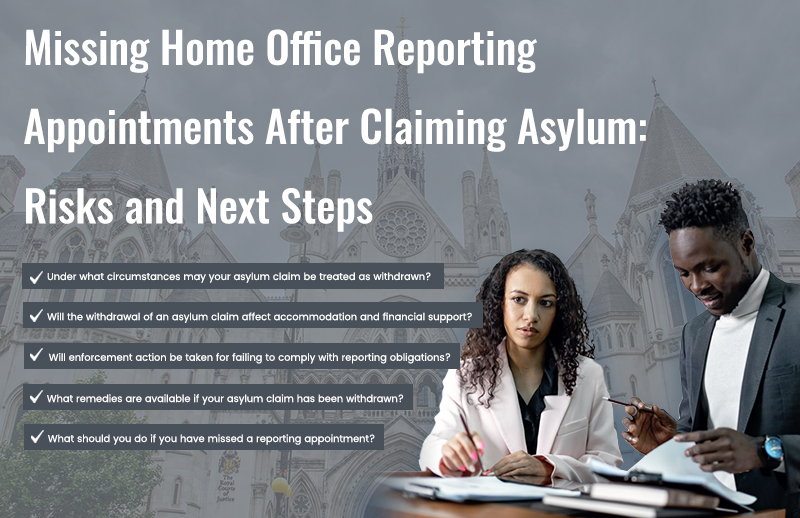
4Changes effective from 8 October 2026 A small amendment to Part Suitability of the Immigration Rules could have significant consequences for people applying to remain in the UK. Statement of Changes HC 584 expands the definition of a “breach of immigration laws” to include conduct that frustrates immigration controls. Applicants with a history of missed reporting appointments or absconding should review the potential impact before submitting an application.
 47
47Claiming asylum in the UK comes with ongoing responsibilities. If the Home Office requires you to report, you must follow those arrangements and keep your contact details up to date.
 336
336A Real Case Shows You: Wrong Applications Can Affect All Future UK Visas
 318
318Recently, we received an inquiry about a British citizenship application that was rejected.
Please complete the form below with your contact details and a brief description of your immigration matter. A member of our team will contact you to discuss your enquiry and arrange a consultation.

We offer free consultations to assess your needs and provide you with an opportunity to experience the high-quality service that Star Jet provides.

Our services are fully transparent, keeping you updated on progress at all times.

With our multi-to-one service model, we aim to achieve satisfactory results in the shortest possible time.

Strict confidentiality of client data is always guaranteed, with data encrypted and securely stored.

We're here to help.
 Chat on WhatsApp
24/7 Customer Support
Birmingham Office
Second Floor,
White House,
111 New Street,
Birmingham
B2 4EU
 0121 517 1168
0795 668 8888
Manchester Office
St James Tower,
7 Charlotte St,
Manchester
M1 4DZ
0161 521 9800
0795 668 8888
Star Jet Immigration Law Firm is authorised and regulated by the UK Immigration Advice Authority (IAA), registration number F202331612, and is authorised as highest level to provide Level 3 immigration advice and services. Based in Birmingham, our experienced immigration lawyers/advisers provide professional immigration advice and representation in English, Chinese and Urdu. Our services include family and partner visas, work and business visas, student and visitor visas, settlement, British citizenship, asylum claim/ human rights protection applications, immigration bail, appeals and legal challenges. We provide personalised advice and support throughout every stage of the immigration process.
In addition, we have dedicated Education and Property Departments, offering comprehensive, one-stop solutions to meet a wide range of client needs. All immigration lawyers and key personnel at Star Jet are based in the UK, ensuring the most privacy for our clients.
Star Jet Service Ltd is a company registered in England and Wales. Registration number: 12300174. Registered office: Second Floor, White House, 111 New Street, Birmingham B2 4EU.
Star Jet Service Ltd, trading as Star Jet Immigration Law Firm, formerly Duber Service, incorporated under the laws of England & Wales since November 2019. Star Jet Immigration Law Firm is authorised to provide immigration advice and services by the IAA.
Authorised and regulated by the IAA under number F202331612. VAT registration number: 426 4335 06.
©️2025 Star Jet Service Ltd | Privacy Policy