
Published on: 2026-04-16  Number of views: 506
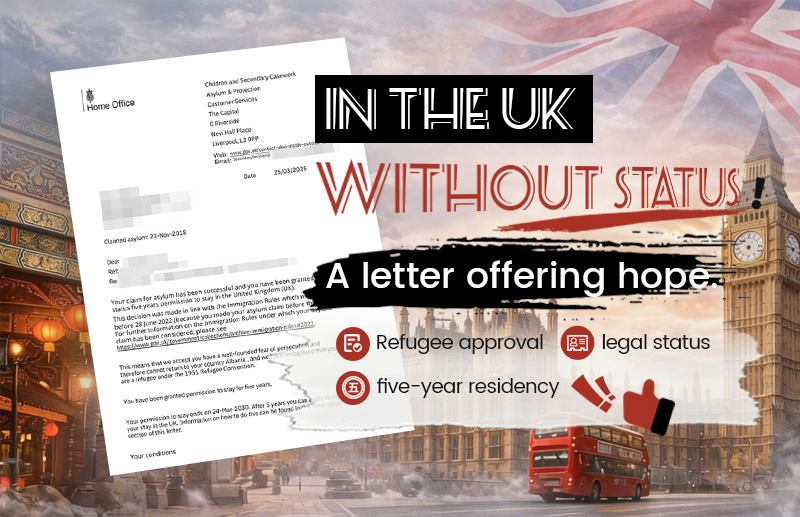
A small number of compatriots developing in the UK face the aforementioned problems. As a Level 3 immigration law firm certified by the UK Immigration Advisory Agency (IAA) (Registration Number: F202331612, verifiable by the IAA), Star Jet Immigration will discuss UK asylum, deportation, and "how to seek legal avenues without status" from a professional perspective.
Let's first look at some official data. According to the latest statistics released by the UK Home Office, in the year ending September 2025, a total of 110,051 people applied for asylum in the UK; at the same time, asylum-related returns reached 10,958, an increase of 26% compared to the previous year. This illustrates that the reality is not that "anyone who applies can stay," nor that "not having a visa will inevitably lead to immediate deportation." Rather, both situations exist simultaneously: on the one hand, a large number of applicants do enter the process each year through asylum or related human rights pathways; on the other hand, under tightened immigration policies, the UK is continuously increasing the intensity and speed of deportation efforts against illegal immigrants.
The most common misconception is that many people view these applications as a "cure-all," or conversely, believe that "a visa termination means you can only overstay your visa in the UK." Neither of these understandings is accurate.
More precisely, UK law does offer pathways based on protection, human rights, or private life that allow individuals already in precarious situations or without valid visas to continue applying to the Home Office under certain conditions. However, the validity of these pathways depends on the validity of the legal grounds provided and the sufficiency of the evidence. Regarding the processing logic for asylum applications, further statements, and related human rights claims, the Home Office's current guidance remains centered on Immigration Rules Part 11, Paragraph 353, and related appeal guidance.
Once an application has been submitted and entered the processing stage, the applicant can usually wait in the UK for a decision before a result is made.
What does this mean?
It doesn't mean you can immediately rely on this status to live or work freely. Rather, it means your case has entered formal proceedings, and you generally won't be immediately removed from the UK during the processing period. However, it's important to note that this doesn't mean you are completely exempt from immigration controls. In practice, you may still be required to report, and the specific arrangements depend on the individual case.
This is crucial for many people who currently lack stable status. In reality, many people encounter significant difficulties finding employment due to their immigration status: Employers are often more cautious due to compliance concerns, either lowering salaries or refusing to hire outright. In this situation, having the application enter the processing stage at least procedurally buys individuals time to handle subsequent arrangements and plan for the next step.
In reality, two main directions are frequently mentioned.
The first type is asylum/protection applications. These address situations where the applicant claims they may face persecution, serious harm, or that the UK should not remove them based on international protection obligations if deported back to their country of origin. The UK's official explanations of the asylum application process, decision-making, and follow-up processing are currently still within the Home Office's asylum guidance system.
In practice, common claims typically include:
1) Risks related to political views or public expression, such as participating in political activities or publicly expressing sensitive positions, which could lead to identification and targeting.
2) Risks related to religion or belief, including risks due to suppression of faith, conversion (e.g., conversion), or participation in specific religious activities.
3) Risks related to specific social group identities, such as sexual orientation or gender-related risks (e.g., forced marriage, severe domestic violence, and lack of state protection), which expose individuals to systemic risks in their country of origin.
4) Past persecution or serious harm suffered by the individual, such as detention, threats, surveillance, or violence. Such experiences, if documented, usually have high probative value.
5) The risk of war or widespread violence, such as from areas of ongoing conflict, facing indiscriminate violence or serious personal danger (usually assessed according to the legal standard of "serious harm").
It is important to emphasize that meeting any one of the above categories does not guarantee asylum. The core of an asylum application lies in whether the legal standard of "persecution or serious harm" is met, and whether there is evidence or reasonable explanation to support the claims. Simple economic reasons or general hardship usually do not constitute grounds for asylum.
The second category consists of claims based on human rights or private life. For example, there may be a stable family relationship established in the UK, a legally significant relationship with children, or a strong foundation for a private life built through long-term residence. These cases are not simply about "playing the victim," but rather about proving, based on specific legal standards, whether requiring you to leave the UK would constitute disproportionate interference or lead to a violation of the UK's human rights obligations. The Home Office, in its guidelines on rights of appeal and further submissions, explicitly includes such removal-related human rights claims within its assessment framework. Therefore, the key to this approach is never "having a story," but rather: whether your situation falls within the legal framework, and whether the materials you have can prove it.
Generally, the basic asylum application process includes:
• Submitting an application to the Home Office and initial registration
• Attending a substantive interview, detailing personal circumstances
• Submitting relevant supporting documentation
• Awaiting the Home Office's decision
During the processing of the application, applicants can usually wait for the result within the UK, but specific rights (such as the right to work) depend on the individual case and the progress of the processing.
The final outcome typically includes:
• Refugee Status
• Humanitarian Protection
• Rejection, in some cases allowing for appeal or further statements (subject to meeting relevant legal standards)
It is important to note that each step is subject to strict procedures and evidentiary standards, and the outcome depends on the specific circumstances of each case.
If an asylum application has been submitted and is still being processed, the applicant typically awaits a decision from the Home Office within the UK. Under the asylum support rules, asylum or Article 3 related applications still being processed by the Home Office or Tribunal are considered "under consideration."
However, this does not mean all risks have automatically disappeared. Official UK guidance on reporting and offender management clearly states that while an immigration case is being processed, the applicant may still be required to report, and the case remains under the framework of immigration enforcement. In other words, "application under review" does not mean "completely unaffected by enforcement measures."
Once an application is formally submitted and enters the processing stage, the applicant can usually wait for the outcome in the UK; however, whether they have the right to work, whether they are required to report, and whether they will face enforcement measures depends on the type of case, the stage of the process, and the specific decision of the Home Office.
Another frequently misunderstood point is conflating "waiting for a result" with "being able to work legally."
According to current Home Office guidance, asylum applicants do not automatically have the right to work upon submitting their application. Permission to work is typically only granted if the application has been pending for more than 12 months, and the delay was not caused by the applicant; even after obtaining permission, the scope of work is not entirely open. The latest official accessible guidance specifically states that for cases where applications are submitted and permission to work is granted on or before March 26, 2026, work is generally still limited to occupations on the Home Office's designated list.
Entering the processing stage of an application does not automatically equate to obtaining work permission. Whether you can work depends on the specific application type, the waiting time, and whether the Home Office grants permission to work.
Official statistics show that the number of asylum applications in the UK has remained high in recent years. In the year ending September 2025 alone, over 110,000 asylum applications were submitted; and by the end of December 2025, approximately 64,000 people were still awaiting an initial decision. This means that many cases cannot be resolved quickly. In reality, waiting for months, even a year or longer, is not uncommon. For those already in a passive position, the procedural "waiting period" is not necessarily a bad thing, as it often provides an important window for supplementing materials, standardizing statements, adjusting strategies, preparing appeals, or making further statements. However, this should not be interpreted as "delaying will solve the problem." Waiting is merely a procedural state and does not guarantee a favorable outcome.
Yes, under UK rules, after a previous protection or human rights claim is rejected, subsequent submissions are usually reviewed according to the logic of paragraph 353 to determine whether they constitute a fresh claim. If a new statement does not constitute a fresh claim, it typically does not create a new right of appeal. The Home Office's latest rights of appeal guidance and Further Submissions guidance explicitly state this. In other words, there is no strict limit to the number of appeals or new applications that can be filed; rather, it depends on:
whether the applicant's subsequent submissions are truly "new," whether they are substantially different from previously rejected submissions, and whether they have a realistic prospect of success.
The official guidance also clearly states that if further submissions are deemed not to constitute a fresh claim, they may be rejected without the right of appeal. Rejection does not necessarily mean the end of the process; with new facts, new evidence, or a new legal basis, it is still possible to continue the fight through appeals, further submissions, or fresh claims. However, whether a new and valid procedure can be initiated depends on whether the requirements of paragraph 353 are met.
Whether it's asylum or claims about private life/human rights, whether you ultimately remain or not hinges on two things:
Second, are your legal reasons sound?
Second, is your evidence sufficient to support your claims?
The UK asylum system has seen a surge in applications and a rising return rate in recent years, indicating that not everyone who enters the process will ultimately be granted asylum. In the year ending September 2025, the number of asylum applications in the UK reached a record high; in the year ending December 2025, approximately 101,000 people are still applying for asylum in the UK. Furthermore, the grant rate fluctuates from year to year, meaning that "applying guarantees success."
Therefore, a truly professional approach is never simply "submitting first and then figuring things out," but rather first determining:
Which legal path does this case fall under?
Which materials constitute core evidence?
Which statements might trigger challenges?
If rejected, is there any room for further action?
As a Level 3 immigration law firm accredited by the IAA (Immigration Advisory Agency), we have seen numerous cases:
Some individuals, seemingly on the defensive, managed to stay in the UK by identifying the right path and organizing their evidence effectively; others, while not entirely without options, saw their cases deteriorate rapidly due to initial misunderstandings of the process or disorganized documentation.
Under UK law, asylum, human rights, and private life pathways are not "shortcuts," nor are they "guarantees of stay simply by applying." They are legal pathways with clear thresholds, strict evidentiary requirements, and are governed by official procedural rules.
For those involved, the most important thing is not to blindly submit applications or be misled by exaggerated online claims, but to clearly understand their situation, feasible pathways, and procedural risks.
Because often, the outcome is not determined by whether you have problems,
but by whether you address the problems at the right time and in the right way.
 4
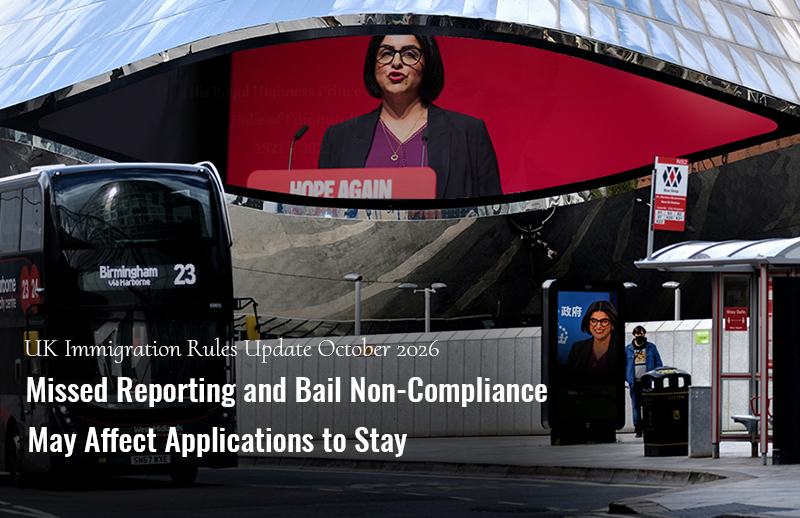
4Changes effective from 8 October 2026 A small amendment to Part Suitability of the Immigration Rules could have significant consequences for people applying to remain in the UK. Statement of Changes HC 584 expands the definition of a “breach of immigration laws” to include conduct that frustrates immigration controls. Applicants with a history of missed reporting appointments or absconding should review the potential impact before submitting an application.
 47
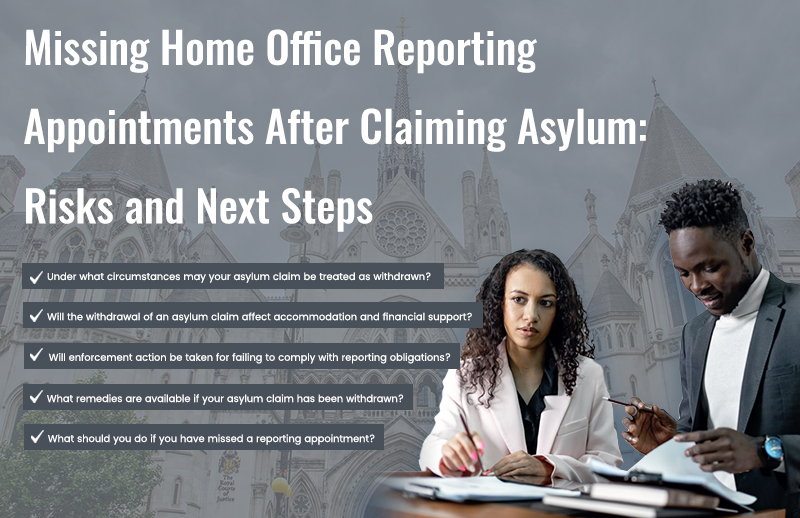
47Claiming asylum in the UK comes with ongoing responsibilities. If the Home Office requires you to report, you must follow those arrangements and keep your contact details up to date.
 178
178Religion? Can leaving a religion or becoming atheist support a UK asylum claim? Learn how the Home Office assesses apostasy, non-religious beliefs, evidence and risk on return.
 337
337A Real Case Shows You: Wrong Applications Can Affect All Future UK Visas
Please complete the form below with your contact details and a brief description of your immigration matter. A member of our team will contact you to discuss your enquiry and arrange a consultation.

We offer free consultations to assess your needs and provide you with an opportunity to experience the high-quality service that Star Jet provides.

Our services are fully transparent, keeping you updated on progress at all times.

With our multi-to-one service model, we aim to achieve satisfactory results in the shortest possible time.

Strict confidentiality of client data is always guaranteed, with data encrypted and securely stored.

We're here to help.
 Chat on WhatsApp
24/7 Customer Support
Birmingham Office
Second Floor,
White House,
111 New Street,
Birmingham
B2 4EU
 0121 517 1168
0795 668 8888
Manchester Office
St James Tower,
7 Charlotte St,
Manchester
M1 4DZ
0161 521 9800
0795 668 8888
Star Jet Immigration Law Firm is authorised and regulated by the UK Immigration Advice Authority (IAA), registration number F202331612, and is authorised as highest level to provide Level 3 immigration advice and services. Based in Birmingham, our experienced immigration lawyers/advisers provide professional immigration advice and representation in English, Chinese and Urdu. Our services include family and partner visas, work and business visas, student and visitor visas, settlement, British citizenship, asylum claim/ human rights protection applications, immigration bail, appeals and legal challenges. We provide personalised advice and support throughout every stage of the immigration process.
In addition, we have dedicated Education and Property Departments, offering comprehensive, one-stop solutions to meet a wide range of client needs. All immigration lawyers and key personnel at Star Jet are based in the UK, ensuring the most privacy for our clients.
Star Jet Service Ltd is a company registered in England and Wales. Registration number: 12300174. Registered office: Second Floor, White House, 111 New Street, Birmingham B2 4EU.
Star Jet Service Ltd, trading as Star Jet Immigration Law Firm, formerly Duber Service, incorporated under the laws of England & Wales since November 2019. Star Jet Immigration Law Firm is authorised to provide immigration advice and services by the IAA.
Authorised and regulated by the IAA under number F202331612. VAT registration number: 426 4335 06.
©️2025 Star Jet Service Ltd | Privacy Policy